
Topic guide · 1 guide
Ergonomic Desk Setup: How to Sit Without Back Pain
Most back pain at a desk comes from three things: a chair set too low, a desk set too high and a screen you lean toward. Here is how to fix all three in about 20 minutes.

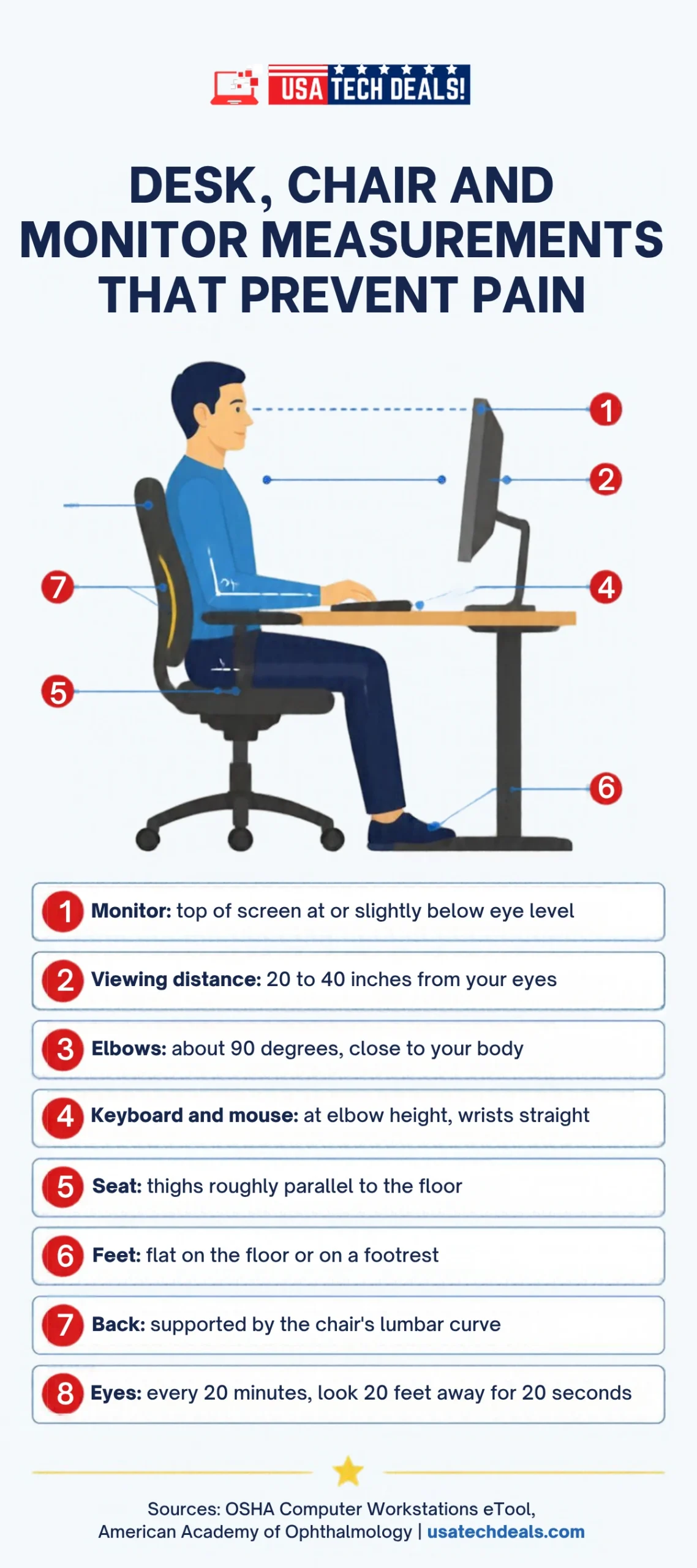
The measurements to check
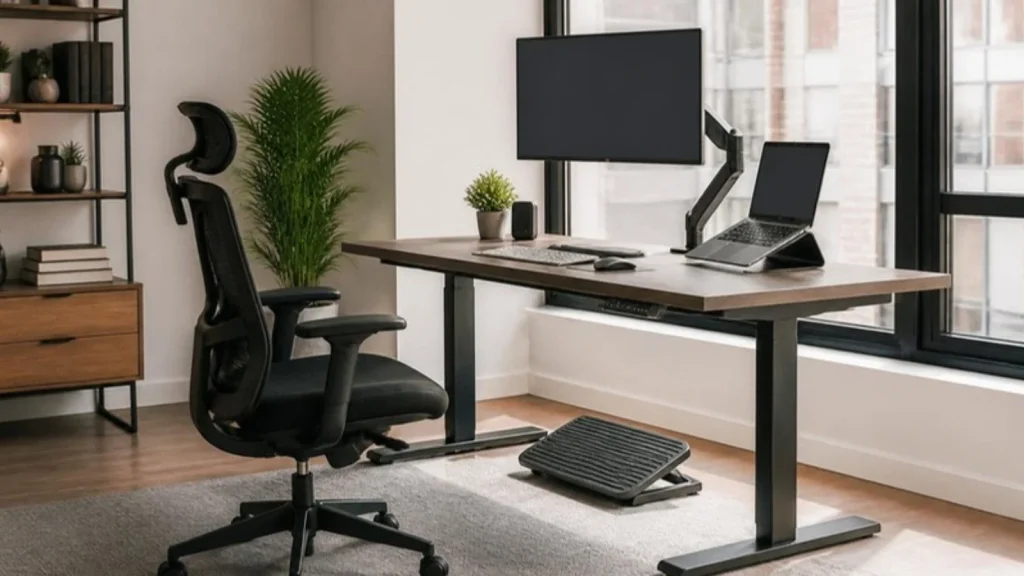
Step 1: Set your chair before anything else
Your chair decides every other height. Raise it until your thighs are roughly level and your feet are flat. If your feet now dangle, add a footrest rather than lowering the chair. Buying new? Look for adjustable lumbar support, seat depth and armrests, and a chair tested to ANSI/the Business and Institutional Furniture Manufacturers Association (BIFMA) X5.1.
Step 2: Bring the desk to your elbows
Relax your shoulders and bend your elbows. The desk surface should sit just under your forearms. Most fixed desks are around 29 to 30 inches, which is too high for many people.
Step 3: Raise the screen
If you look down at a laptop all day, your neck carries the load. the Occupational Safety and Health Administration (OSHA) recommends the top of the screen at or slightly below eye level, with the screen perpendicular to any window to cut glare. A stand and a separate keyboard fix this for laptop users. Read the full monitor height guide.
Step 4: Check the room, not just the desk
US apartments and spare bedrooms often mean working against a wall or beside a bed. Keep at least a clear path behind your chair, put the window to your side and run cords along the wall so you are not hooking a foot on them.
What is the fastest fix for desk back pain?
Set the chair first: feet flat, knees about level with your hips, back against the backrest, then bring the desk to your elbows and the top of the screen to eye level, 20 to 40 inches away. Most people finish all three in about 20 minutes with the Desk Height Calculator.
All guides in this topic
FAQ
What is the correct desk height for my height?
It is the height where your forearms rest flat with relaxed shoulders. Use the calculator for a starting number, then adjust for comfort.
Do I need an expensive ergonomic chair?
No. Adjustable seat height and good lower back support matter most. A cushion or lumbar pillow can fix many cheaper chairs.
How often should I get up?
A short break every 30 to 45 minutes helps. Even standing up for a call counts.
When should I see a doctor?
If pain lasts more than a few weeks, spreads down an arm or leg, or comes with numbness, see a doctor or physical therapist. A better desk setup helps, but it does not replace medical care.
Sources
- OSHA, Computer Workstations eTool
- American Academy of Ophthalmology, Eye Strain
- BIFMA, ANSI/BIFMA X5.1
This guide is general information, not medical advice.